Once again, Doctor Practice wasn't thinking when he threw his dirty shop rags into a pile in the corner of his shop. He probably didn't know (much less, care) that dirty shop rags can produce some pretty nasty fumes and depending on what's in them, even ignite through spontaneous combustion. For safety's sake, dirty shop rags should always be stored in an enclosed metal container with a screw-on or otherwise tight-fitting lid. Then, if the combustible material in the rags was to ignite, the fire would put itself out quickly due to lack of oxygen. Plus...using such a container will keep the toxic fumes out of the air in the shop.
Also, when you dispose of dirty or oily rags, hang them up outdoors in an open, well-ventilated area away from the house and garage for a few days to let them dry out before putting them in the trash can. Try draping them over a metal fence or clothes line. Moral: NEVER store dirty or oily shop rags out in the open, in the shop. Throw them away outdoors (after they've aired-out) or store them in a closed METAL container.
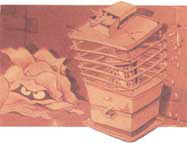
Then there's the matter of the kerosene heater in the shop. What is "our boy" thinking -- or an even better question might be "why isn't he thinking?" An open flame in a workshop is an open invitation to big trouble! If the good Doctor has to use some form of auxiliary heat source to warm the shop, he should be using something without open flames or exposed heating elements. An electric, oil-filled radiator-style heater is a much better alternative.
Notice a fire extinguisher anywhere? Every shop should have an ABC (all-purpose) fire extinguisher close at hand that's capable of putting out wood, paper, rubbish, electrical, gasoline, grease and oil fires. If a fire started and appeared to be getting out of control, let's hope our brain surgeon would have the brains to call the fire department for assistance. MORAL: Even if you're freezing your buns off, NEVER mix open flames or exposed, glowing heating elements with shop sawdust and wood chips. And ALWAYS have a fully-charged fire extinguisher close at hand to deal with any small fires which might occur -- and be prepared to call the fire department IMMEDIATELY if a fire starts to get out of control.

What about lights casting shadows on the walls? A dimly lit workshop is dangerous. Not only does it prevent you from seeing rotating blades and cutters clearly, it can cause eye strain, fatigue and headaches. We'll bet that our Doctor friend wouldn't think of removing a brain tumor while his scrub nurse illuminated the patient's noggin with a flashlight!
A brightly lit shop should be set up to cast light directly over all work areas. If you're using incandescent lighting (bulbs), every fixture should have a reflector to diffuse the light. An even better choice would be to use fluorescent lighting. They'll supply a lot more light (with far less shadows) than incandescent bulbs -- plus, they use a lot less electricity, too. All unexposed light bulbs need to be covered. There are even plastic covers made specifically for fluorescent tubes. These are a good idea, since flying chips and debris could hit these tubes, causing an explosion. MORAL: Be sure your shop is well illuminated at all times. Never work in dark corners or other areas where you can't clearly see what you're doing.
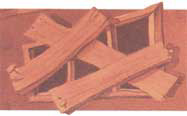
Boarded-up workshop windows are a BAD idea! If you've spent any amount of time in an unventilated shop, you know how quickly the air can become stagnant. Sawdust and toxic fumes can build up, causing respiratory problems and an increased potential for fire. Every shop should have windows that can be opened and an exhaust fan to provide cross-ventilation. Fresh air helps to eliminate dust and fumes and keeps you alert. MORAL: A shop that breathes helps you breathe and work more efficiently.

Finally...take a good look at our smiling Doctor and it should be fairly obvious that he not only lacks respect for his environment...he has little for his personal safety, as well. Here are three reasons why:
1: His Eyes
Why isn't he wearing safety goggles or a shield to protect his eyes from flying wood chips and sawdust?
2: His Ears
As a Doctor, he should know that constant exposure to the high frequencies of certain power tools (most notably, routers, thickness planers, table saws and jointers) can cause permanent hearing loss. The damaging effects are cumulative, so it may be a long time before he notices any loss. He should be wearing hearing protectors that have been specifically designed to greatly reduce these high frequencies without filtering out the frequencies of the human voice.
3: His Clothing
He may be a real "dude" in the office, but his attire in the shop is unacceptable. He should NEVER wear loose clothing, gloves or jewelry in the workshop. His shirtsleeves should be rolled-up above the elbows and his tie should be hanging in the closet. For shoes, he should be wearing lace-up tennis or athletic shoes with non-slip soles...NOT his alligator "Mary-Janes". His long hair should be tucked under a hat.
So far, our Dr. Practice has made numerous workshop safety mistakes. Hopefully, he's not as careless with his patients as he is in his workshop. He should always remember that the safest tools are those operated by an informed woodworker who has carefully read the owner's manuals that came with them...BEFORE he ever turns them on for the first time.
In addition, he should know that the danger zone for power tools is anywhere within 3" of a moving cutter or part. He should always use the safety guards that came with his tools and other safety devices designed to keep his hands out of harm's way such as push sticks, featherboards, fence straddlers and push blocks.
Shopsmith also offers a number of optional safety accessories for certain tools that you should consider very carefully. They've been designed to provide the protection and support you need to work more safely in your shop. These accessories include, but are not limited to the following:
And last, but certainly not least, we need to always be sure that our power tools are maintained properly and that our blades, cutters and bits are sharp. Remember...shop safety doesn't just happen...it comes from following the rules of common sense and paying attention. Follow these simple rules and you'll be around for a long time...with all your appendages intact !
|
 Find
A Shopsmith Woodworking Academy Near You
 National
Woodworking Academy in Dayton, OH